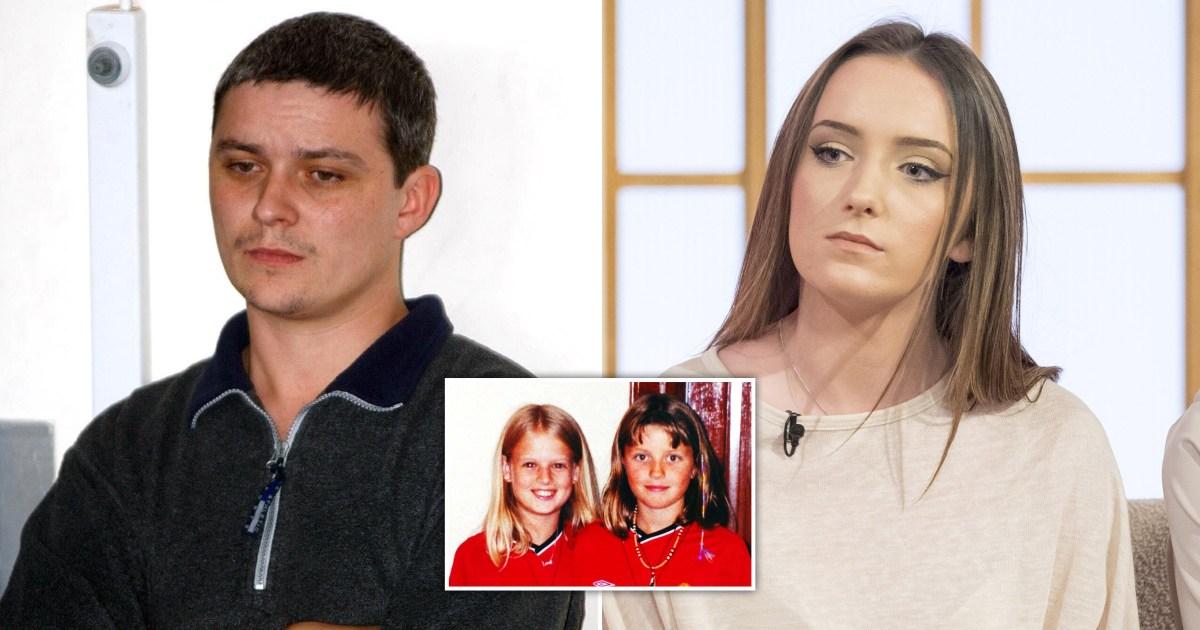
Ian Huntley's Daughter: The Burden Lifted by His Death in Prison
The name Ian Huntley sends shivers down the spine of a nation still scarred by the horrific Soham murders of 2002. His crimes against ten-year-olds Holly Wells and Jessica Chapman etched him into the annals of Britain's most reviled criminals. Yet, for one individual, his recent death in a maximum-security prison brought not sorrow, but an overwhelming sense of relief: his daughter, Samantha Bryan. Her story offers a unique, profound, and often painful perspective on the shadow cast by a parent's monstrous actions, and the liberation felt when that shadow finally dissipates.
The Unveiling of a Dark Legacy: Samantha Bryan's Discovery
For much of her young life, Samantha Bryan was unaware of the true identity and heinous deeds of her biological father. Her mother, Katie Bryan, had been in a relationship with Ian Huntley when she was just 15, becoming pregnant at 16 before wisely leaving him. This decision, undoubtedly driven by an instinct for self-preservation, shielded Samantha from her father's direct influence. However, secrets of such magnitude rarely remain buried forever.
According to reports, Samantha discovered the horrifying truth when she was 14 years old, while researching a school crime project. The revelation that the infamous Soham murderer, Ian Huntley, was her biological father must have been an earth-shshattering moment, instantly transforming her understanding of her own lineage and identity. Imagine the psychological weight of this discovery: the sudden realization that a figure of such national loathing is inextricably linked to your very existence. This wasn't merely a distant relative; this was her father, a man whose name was synonymous with unspeakable evil. For
Ian Huntley's daughter, Samantha Bryan, this moment marked the beginning of a profound and unwanted burden. It meant living under the shadow of a monster, grappling with a biological connection to a man who committed acts that shocked the conscience of a nation.
A Nation's Relief, A Daughter's Liberation: The Death of Ian Huntley
Ian Huntley's reign of terror ended in 2003 when he was convicted of the murders of Holly Wells and Jessica Chapman, receiving a life sentence with a minimum tariff of 40 years. For two decades, he remained incarcerated, a constant, chilling reminder of the Soham tragedy. His death, which occurred recently in a hospital after he sustained severe brain trauma during an attack by another inmate in HMP Frankland, Durham, brought a collective sigh of relief across Britain. However, for Samantha Bryan, this relief was intensely personal and deeply cathartic.
Upon hearing the news of his death, Samantha's reaction was unequivocal. She told reporters that she was "over the moon," felt "relieved," and did not cry, but rather smiled. This sentiment wasn't a callous disregard for human life, but a genuine expression of liberation from a heavy psychological burden. She candidly admitted, "Being his daughter has been a heavy burden. It felt like I could breathe again." The attack, which reportedly involved triple murderer Anthony Russell striking Huntley multiple times with a metal pole, led to Huntley being placed in a medically induced coma, with life support later withdrawn after consultations with his mother. The violent end of Ian Huntley marked, for his daughter, the end of an era of dread and shame. It was a final severing of the link to a man who, in her words, was "nothing to me apart from biology." For more on her direct quotes, read
Soham Killer's Daughter on His Death: 'Over the Moon,' Relief and No Tears.
Coping with a Monster's Shadow: The Psychological Impact
The experience of
Ian Huntley's daughter, Samantha Bryan, sheds light on the immense psychological challenges faced by individuals who discover they are related to notorious criminals. This isn't merely a matter of public perception; it's an internal battle for identity, self-worth, and a sense of belonging. The very name one carries can become a source of shame and scrutiny, regardless of personal innocence.
For Samantha, the burden was multi-faceted:
- Identity Crisis: Struggling to reconcile her own identity with the genetic link to a reviled figure.
- Public Stigma: The fear of being judged or associated with her father's crimes, even if she had no involvement or knowledge.
- Emotional Conflict: The complex emotions of grief for a parent (even a monstrous one) versus the overwhelming desire for him to disappear from her life.
- Seeking Normalcy: The constant uphill battle to lead a normal life free from the shadow of his infamy.
Understanding this unique plight offers valuable insight into the resilience of the human spirit. While one cannot choose their biological parentage, one can choose how to respond to it. Samantha Bryan's outspoken relief is a testament to her strength and her clear desire to distance herself from the actions of a man she never truly knew as a father, only as a source of national horror. Her journey highlights the profound human need for autonomy and the right to forge one's own path, independent of inherited burdens.
The Enduring Memory of Holly and Jessica
Crucially, Samantha Bryan has always been clear that her own personal relief should not overshadow the tragic memory of Holly Wells and Jessica Chapman. Despite her complicated relationship with her biological father, her empathy for the victims and their families remains strong. "Over the years I’ve cried many times over the thought of Holly and Jessica and what their family have gone through," she stated. "I don’t ever want Holly and Jessica to ever be forgotten."
This statement is a powerful reminder that even amidst her personal liberation, the core tragedy of the Soham murders endures. It underscores the lasting pain inflicted upon the Wells and Chapman families and the community of Soham. By emphasizing the remembrance of the girls, Samantha redirects the focus away from her father's criminal legacy and towards the innocent lives he cruelly took. It also serves as a poignant distinction between the perpetrator and his innocent offspring, demonstrating her moral compass and her desire for justice for the victims.
Conclusion
The death of Ian Huntley, one of Britain’s most infamous child killers, marks the end of a dark chapter for many, but for his daughter, Samantha Bryan, it signifies a deeply personal liberation. Her candid expressions of relief and even joy upon hearing of his demise highlight the unique and crushing burden carried by children of notorious criminals. While the nation collectively remembers the horror of the Soham murders and honors the memory of Holly Wells and Jessica Chapman, Samantha Bryan's story offers a compelling insight into the profound struggle for identity and peace when one is inextricably linked to such a reviled figure. Her ability to articulate her feelings, acknowledge the victims, and ultimately seek her own form of closure, serves as a testament to the enduring human capacity to find light even in the deepest shadows.